
 EN
EN



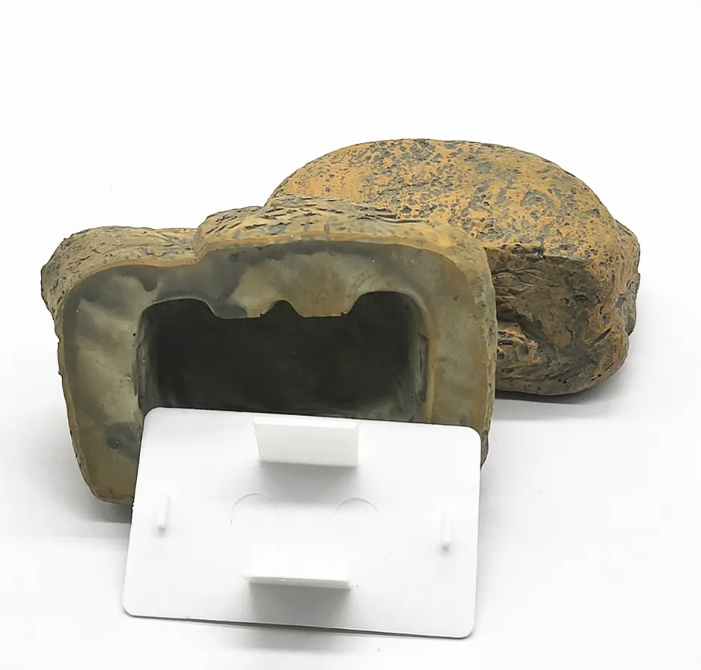
Commercial Durability Standards for Key Holders
Why Consumer-Grade Key Holders Fail Under High-Traffic Commercial Conditions
Most consumer grade key holders just aren't built to handle what commercial buildings throw at them day after day. The thin metal parts tend to bend out of shape when keys go in and out constantly. Plastic parts crack over time as temperatures fluctuate between hot and cold. And those little contact points where parts rub together? They wear away the protective finish pretty quickly, leaving the actual metal underneath vulnerable to rust. We've seen this happen a lot actually - in places where people access keys more than 200 times each day, about four out of five cheap key holders start failing within half a year according to Facility Management Journal last year. What makes matters worse is these budget models typically don't have extra reinforcement around the spots where most stress happens like the pivots and clasps. That means keys can pop right out while someone is walking across the parking lot or riding in an elevator.
Material Performance: Stainless Steel, Titanium, and Aerospace Aluminum in Real-World Use
Material choice is the primary determinant of long-term performance in high-stress environments:
- 316L Stainless Steel: Resists salt spray and industrial chemicals while maintaining functional integrity through 50,000+ insertion/extraction cycles—ideal for coastal, wastewater, or chemical-handling facilities.
- Grade 5 Titanium: Withstands crushing forces up to 1,200 PSI without deformation—making it indispensable for warehouse logistics, construction, and heavy-equipment operations.
- Aerospace Aluminum (7075-T6): Delivers a 60% weight reduction versus steel while passing MIL-SPEC abrasion testing after 12 months of continuous belt carry.
Field data confirms titanium variants retain 98% clip tension after three years—outperforming zinc alloys by 400% in sustained retention reliability.
Certified Reliability: UL 409 and ANSI/BHMA A156.13 Testing Benchmarks for Key Holder Retention & Impact Resistance
Commercial-grade key holders must be validated against real-world hazards—not just lab ideals. UL 409 certification requires:
- Retention Testing: 5,000 insertion/extraction cycles with ≥5% variance in actuation force
- Impact Resistance: Survival of 3.5J impacts from multiple angles (equivalent to a 1kg mass dropped from 35cm)
- Corrosion Validation: Zero functional degradation after 500 hours in ASTM B117 salt fog exposure
ANSI/BHMA A156.13 complements this with cyclic vertical load testing (15kg pull × 10,000 repetitions) and thermal shock validation across -20°C to 70°C transitions. Units certified to both standards demonstrate a 92% lower field failure rate than non-certified alternatives—proving that third-party validation directly correlates with operational resilience.
Hidden Storage Design That Enhances Long-Term Durability
Fully Enclosed Compartments vs. Semi-Exposed Slots: Trade-offs in Wear Resistance and Key Protection
Enclosed storage compartments offer full protection against environmental hazards. They block out dust, moisture, and those little abrasive particles that wear down metal parts over time. Workers in factories report these designs last about 60% longer than the half-covered alternatives we see everywhere else. Sure, there are extra moving pieces which means hinges need special reinforcement, but that's worth it when dirt and grime are constant problems. On the flip side, semi-exposed slots let people get to their tools faster something soldiers and first responders really appreciate during emergencies. The downside? Those exposed key slots take a beating, particularly when attached to duty belts or MOLLE gear systems. Anyone who has worked in the field knows keys stored this way tend to need replacing three times as often during active operations. For most workplaces, sealed containers work best in places like factories, power plants, and construction sites where conditions are harsh. But for office environments or stores where everything stays clean, the semi-open style still makes sense for day-to-day operations.
Zero-Protrusion Profiles: How Slim, Flush-Mounted Key Holders Reduce Pocket, Belt, and MOLLE System Wear
Key holders that sit flat against clothing without any sticking out parts help stop those annoying snags that slowly ruin gear over months of use. The really thin design (less than 5mm thick) cuts down on how much our belts and pockets get worn down each year because there's less rubbing when moving around. For folks working with MOLLE systems, this matters a lot since the flat surface doesn't damage the webbing like traditional models do after long periods in the field. Municipal maintenance teams have actually seen their cost to replace uniforms drop by about 70% once they started using these low profile versions instead of older styles. And it's not just about saving money on clothes either. These sleek designs also mean fewer bumps against doors, car interiors, and other equipment surfaces while carrying keys. The result? Less chance of misalignment problems and longer lasting carriers overall.
Proven Tactical Key Holders for Utility, Security, and Field Teams
Bunker-Grade Key Holders: Performance Insights from Municipal Maintenance and First Responder Deployments (2022–2024)
Bunker grade key holders built to withstand harsh environments have become essential gear for city maintenance workers and emergency personnel. Testing from 2022 through 2024 shows these devices keep working perfectly even after being submerged, getting dust inside, or taking hard knocks - situations where regular consumer models often fail completely or lose keys entirely. What makes them different? Stronger hinges, three layers of sealing around the closure points, and special latches with rubber gaskets that actually stop dirt and moisture from getting in. Firefighters tell stories about never losing access to their equipment during rescue missions, and city crews notice they need to replace these holders much less frequently now. The bottom line? Keys stay put where they should be, easy to grab when needed, and won't shift around annoyingly on duty belts or tactical gear. For anyone who needs something that just works without fail, this kind of rugged design makes all the difference in real world conditions.